Fake crypto exchanges can look legitimate until you try to withdraw. Learn the warning signs, verification steps and forensic options if funds have already been sent.
.png)
Quick answer: A fake crypto exchange is a website or app that imitates a legitimate trading platform but is designed to take deposits rather than execute real investments. The strongest warning signs are guaranteed returns, pressure to deposit more, unverifiable licensing, fabricated balances and demands for extra taxes or fees before withdrawals are released.
Fake trading platforms can look remarkably convincing. They may show live-looking charts, account balances, support chat, identity-verification pages and even small early withdrawals. None of those features proves that real trading is taking place.
The defining test often appears later. When the user tries to withdraw a meaningful amount, the platform invents a new condition: tax, liquidity charge, compliance deposit, certification fee or account-unfreezing payment. Sending more money usually increases the loss rather than releasing the funds.
What is a fake crypto exchange?
A fake crypto exchange is a fraudulent website or application presented as a legitimate place to buy, sell or trade digital assets. The user may believe funds are being held in an exchange account, while in reality the deposits are being sent to wallets controlled by the fraudsters.
The U.S. SEC has warned about fraudulent crypto trading websites that promise investment returns and later demand additional payments before purported profits can be withdrawn. The CFTC similarly warns that platform frauds may show fictional gains and then introduce undisclosed fees or fake taxes at withdrawal.
Fake exchanges are also common inside relationship investment scams, sometimes called pig-butchering scams. A person first builds trust through social media, messaging or dating platforms, then introduces the victim to a supposedly profitable trading opportunity.
How do fake crypto exchange scams work?
The scam is usually built around progressive commitment. The victim is not always asked for a large amount at the beginning.
First, the platform appears functional. The user creates an account and sends a manageable deposit. The interface may show rapid profits or successful trades. In some cases, the fraudsters allow a small withdrawal to create confidence.
Next, the victim is encouraged to invest more. A supposed mentor, analyst, romantic partner or investment group may create urgency by pointing to a special trading window or unusually profitable opportunity.
Finally, when the victim requests a substantial withdrawal, the platform creates an obstacle. The balance may be frozen until a tax, commission, certification payment, insurance charge or security deposit is paid.
This pattern is documented repeatedly in the California DFPI Crypto Scam Tracker, including reports involving fraudulent platforms that demanded new fees when victims attempted to withdraw.
What are the red flags of a fake crypto trading platform?
No single warning sign proves a platform is fraudulent, but several together should stop a deposit until the business is independently verified.
- Guaranteed or unusually consistent returns. Real markets do not generate guaranteed profits with little or no risk.
- You were introduced through an unsolicited relationship. A stranger, online friend or romantic contact moves the conversation from trust-building to crypto investing.
- The platform is difficult to verify independently. Company details, regulatory status, physical address or management information cannot be confirmed through official sources.
- Deposits go to changing wallet addresses or unrelated recipients. Payment instructions do not clearly match the legal entity that supposedly operates the platform.
- The account shows implausibly smooth profits. Balances rise quickly regardless of real market movement.
- Withdrawal rules appear only after you ask for your money. Taxes, release fees, insurance, commissions or additional deposits suddenly become mandatory.
- Support pressures you to act immediately. You are threatened with penalties, daily charges, account deletion or lost profits if you do not pay.
- You are asked for credentials that a platform should not need. Private keys, seed phrases, bank passwords or remote access are major warning signs.
How can you check a crypto exchange before you deposit?
Start with independent verification, not with the links or documents provided by the person promoting the platform.
- Search for the legal company name, not only the brand shown on the website.
- Check the relevant regulator or licensing register for the jurisdiction the platform claims to operate in. Regulatory requirements vary by country, so verify what authorization should actually exist rather than relying on a generic badge.
- Compare the domain with the official domain referenced by the company's verified channels. Look for misspellings, unusual subdomains and recently changed web addresses.
- Read several pages of independent search results using the brand name together with terms such as scam, fraud, complaint or withdrawal.
- Confirm that support contact details are consistent across official sources.
- Do not treat an app-store listing as proof of legitimacy. Fraudulent apps can appear in well-known stores.
The SEC specifically cautions that a legitimate-looking website or an app from a familiar app store can still be fraudulent.
Does a successful small withdrawal prove the exchange is real?
No. Small withdrawals can be part of the scam. Allowing the victim to withdraw a modest amount creates trust and makes a later, larger deposit feel safer.
The SEC has described relationship investment scams in which fraudsters allow an early withdrawal before persuading the victim to invest more. The apparent withdrawal is therefore evidence that money was returned once, not evidence that the platform is conducting genuine trading or holds the displayed account balance.
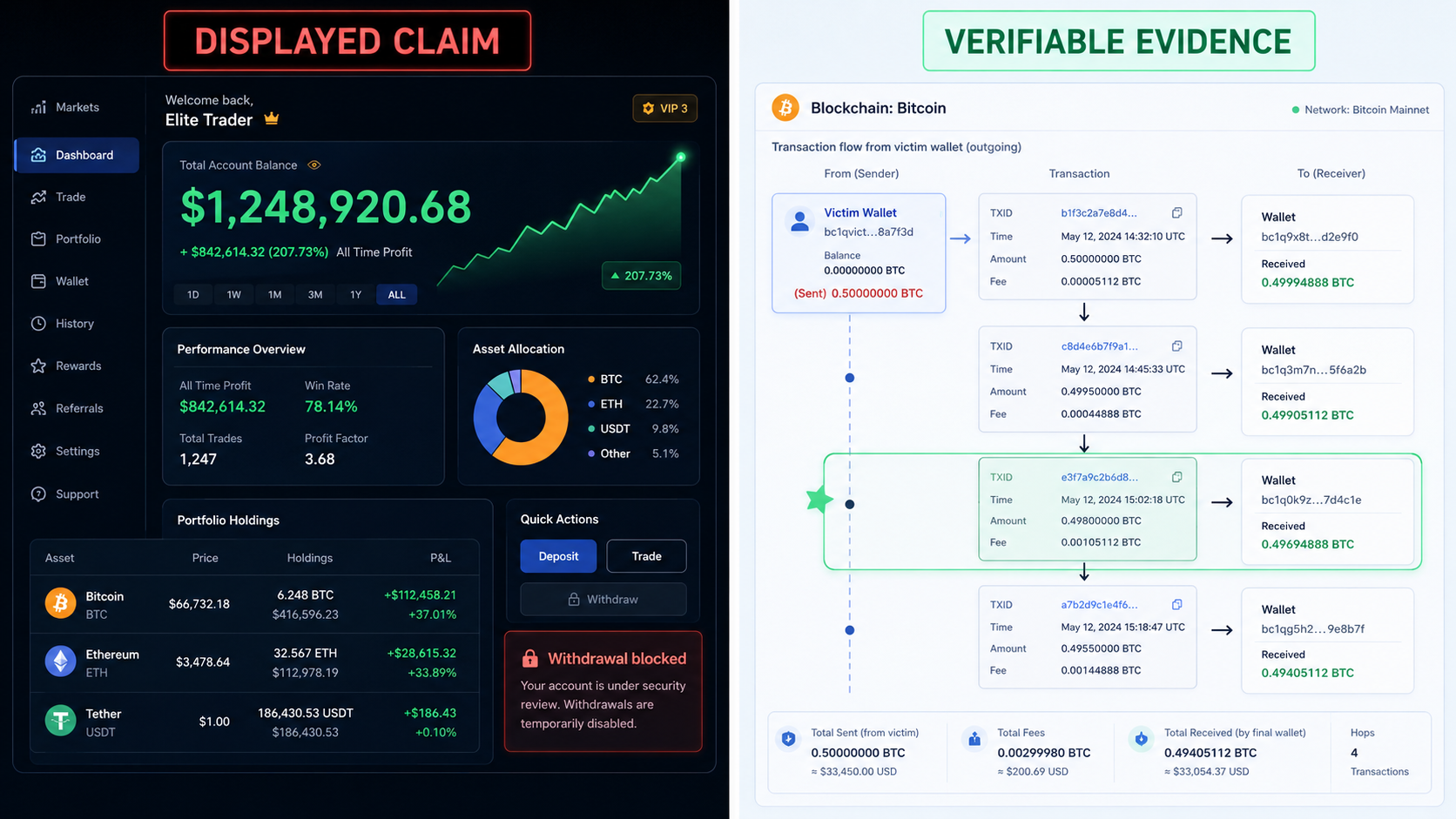
From a forensic perspective, the critical distinction is between what the website displays and what actually happened to the victim's cryptocurrency. A balance shown inside a fraudulent platform can be changed by the operator at will. The blockchain record of the victim's deposits is the evidence that shows where real assets were sent.
INVESTIGATOR INSIGHT
“The number on the screen is not the asset. In fake-exchange cases, we start with the victim’s real deposit transactions and ignore the displayed balance until it can be independently supported. The on-chain path tells us where the cryptocurrency actually moved, while the platform interface shows us what the victim was being told. That difference is often central to proving how the fraud worked.”
— Žiga Karič, Blockchain forensic investigator, Bloctopus Intelligence
What should you do if you already deposited to a fake exchange?
Stop sending additional money, even if the platform claims one final payment will release everything. The next payment often becomes another loss.
Preserve the evidence before websites, chat accounts or support channels disappear:
- All transaction hashes, wallet addresses, deposit amounts and dates.
- Screenshots of the account balance, trading interface and withdrawal messages.
- The exact website domains and app names used.
- Emails, messaging-app conversations, usernames, phone numbers and social profiles.
- Bank or exchange records showing how the cryptocurrency used for the deposits was acquired.
- Any documents the platform sent, including supposed tax notices, compliance certificates or account statements.
Notify the exchange or service from which you sent the cryptocurrency if the transfer was recent, and report the fraud through the appropriate law-enforcement or cybercrime channel in your jurisdiction. Bloctopus Intelligence’s incident reporting service can help organize the evidence into a structured record for subsequent reporting.
Can funds sent to a fake crypto exchange be traced or recovered?
The deposits are often traceable because the victim sent real cryptocurrency to real blockchain addresses, even though the trading interface itself was fictional. Investigators can start from those deposit transactions and follow the subsequent movement of the assets.
The trace may reveal consolidation wallets, transfers between related addresses, cross-chain movement or interaction with centralized exchanges. If funds reach an identifiable custodian, that can create a more actionable lead.
Recovery is not guaranteed. Some funds remain in self-custody, move through complex infrastructure or leave a jurisdiction where practical legal action is difficult. A professional assessment should distinguish a technically traceable path from a realistic recovery path.
For significant losses, crypto funds tracking can help establish where the victim’s deposits actually went, regardless of what the fake platform showed on screen.
How are fake exchanges used in pig-butchering scams?
In relationship investment scams, the fake platform is often only one component of a much longer operation. The fraudster first creates trust, sometimes over weeks or months, before introducing crypto trading.
The victim may be coached through opening a legitimate exchange account, buying cryptocurrency and transferring it to the fraudulent platform. This is why bank or exchange statements can look normal at the beginning. The fraud occurs when the victim is induced to send assets onward to wallets controlled by the scam network.
Once the victim believes the displayed profits are real, the fraudster can use the fictional balance to justify larger deposits, loans or transfers from savings. The withdrawal stage then becomes another opportunity to extract money through advance-fee demands.
For more on this pattern, see Pig Butchering Scam Explained: How It Works and How to Trace It.
Why paying a withdrawal tax or release fee is dangerous
A legitimate tax obligation is not normally resolved by sending cryptocurrency to an arbitrary wallet controlled by a support agent. If a platform says your profits are frozen until you make an additional external payment, independently verify the legal and regulatory basis before sending anything.
The SEC describes this pattern as advance-fee fraud: the victim is asked to pay more money to receive money that is supposedly already theirs.
Once the first withdrawal fee is paid, a second reason may appear: additional tax, insurance, verification, anti-money-laundering deposit or administrative charge. That sequence is a strong indicator that the displayed balance may not represent recoverable assets at all.
Verify the platform before you trust the interface
A fake crypto exchange can reproduce the appearance of a real financial platform with relatively little effort. Charts, profit figures, customer support and early withdrawals can all be manufactured or controlled by the fraudster.
The important evidence sits outside the interface: who operates the business, whether its claimed authorization is real, where the deposits actually move on-chain and whether withdrawal conditions existed before the user asked for their funds.
If you suspect the platform is fraudulent, stop adding money and preserve the evidence. The faster the real blockchain transfers are identified, the sooner an investigator can assess whether the funds reached an actionable service and whether further recovery work is proportionate.